Windows turn passing light into something we can see and feel. Across quiet rooms, moving trains, weathered walls, sacred interiors and rain-covered glass, these openings frame mor
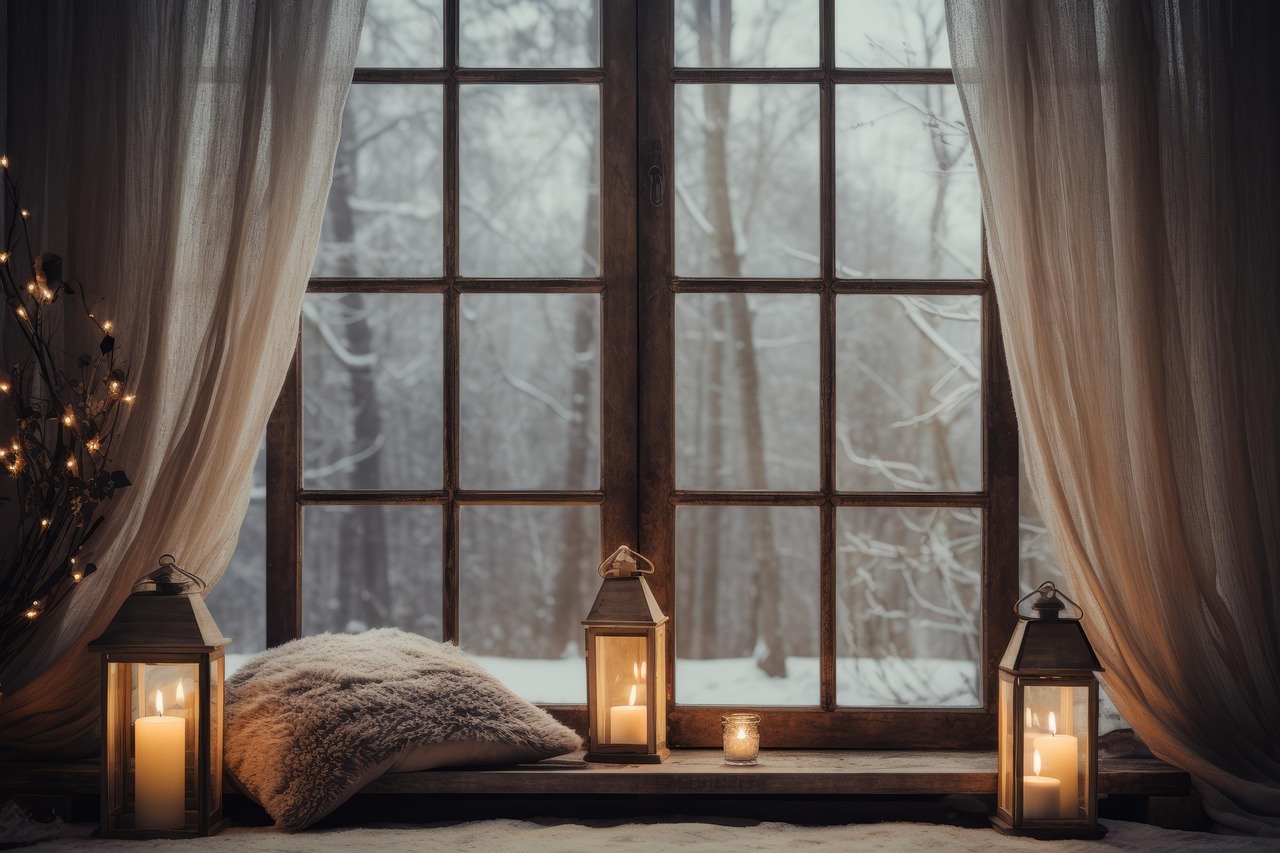
A broad wooden window overlooks a snowy forest, framed by pale curtains, cushions and several glowing lanterns.
A grid of dark wooden mullions holds the pale winter landscape in separate panels. Outside, slender trunks fade into snow and mist; inside, layered curtains fall in soft folds on both sides of the frame. Lanterns and a small candle introduce points of amber light along the sill, warming the darker wood and the thick, textured cushions. The contrast is gentle rather than dramatic. Cool daylight fills the glass, while the low flames gather around nearby objects and leave the upper room subdued. Every surface carries a different response to light: glass stays silvery, fabric becomes creamy, fur catches fine highlights and the timber remains dense and grounded.
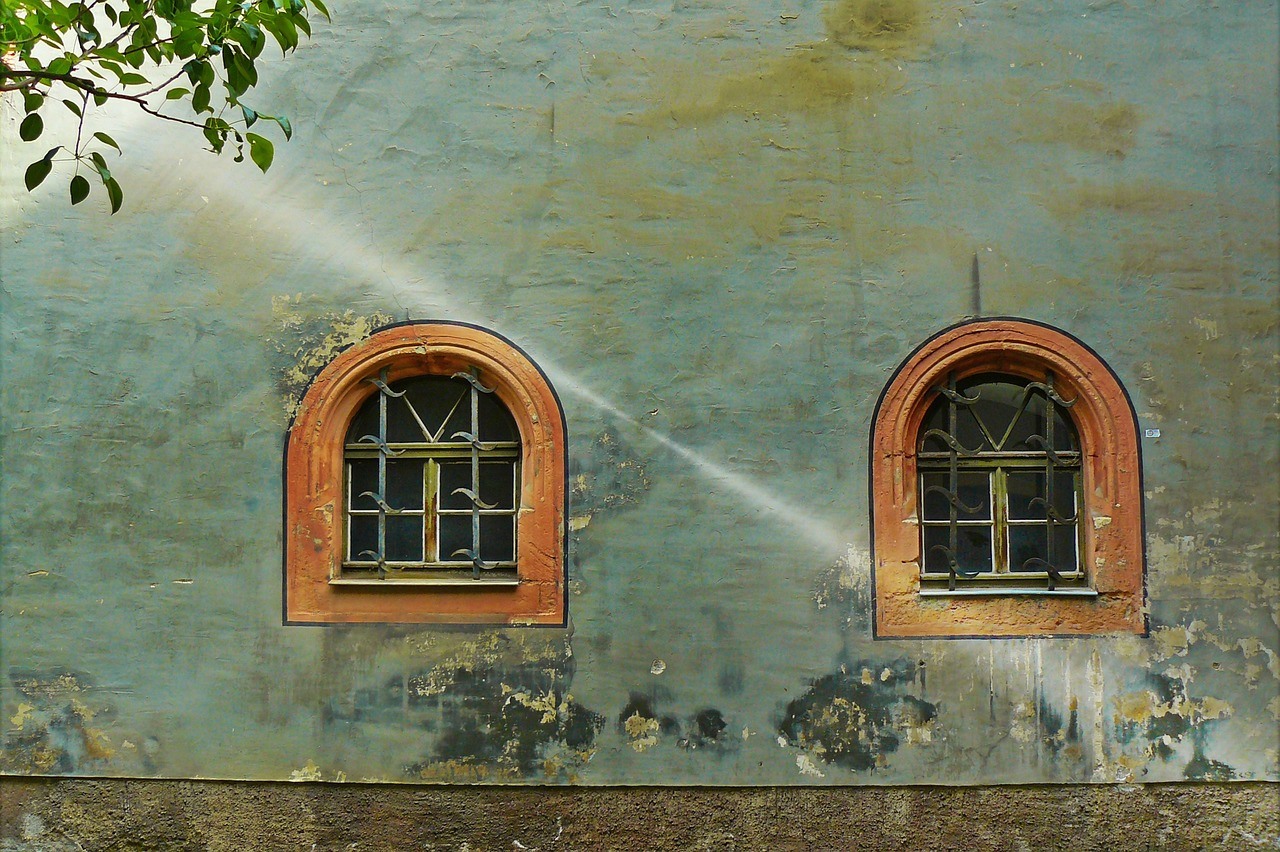
Two small arched windows with orange surrounds sit in a faded blue-green wall crossed by diagonal sunbeams.
Two arched windows sit side by side in a broad expanse of faded blue-green plaster. Warm orange surrounds lift them from the wall, while dark grilles divide their shadowed interiors into irregular panes. The surface around them carries stains, peeling areas and shifts of color that become more visible under angled daylight. Two diagonal beams cross the façade from upper left to lower right, briefly connecting the windows and disrupting the otherwise level composition. Leaves intrude at the top corner, adding a softer edge to the masonry. The light does not conceal the building’s age; it emphasizes every uneven layer and turns the worn wall into a changing field of color.