Field observations
Windows turn passing light into something we can see and feel. Across quiet rooms, moving trains, weathered walls, sacred interiors and rain-covered glass, these openings frame mor
Frames Within the Frame
Window construction introduces order before any subject appears beyond the glass. Mullions divide a snowy forest into rectangles, pointed church panes lift the eye vertically and a rounded train window softens the hard lines of a carriage. These internal frames control proportion and pace. Small panes encourage close looking because each section holds only a fragment; a broad opening gives the landscape room to extend. Curtains, recesses and nearby walls add further borders, sometimes narrowing the visible world to a bright strip. Even an open casement creates new angles as it turns away from the wall. The photographs show framing as an active visual force, separating light from shadow while connecting near surfaces to distant scenes.
Continue through the collectionAll field notesWalls That Hold Openings
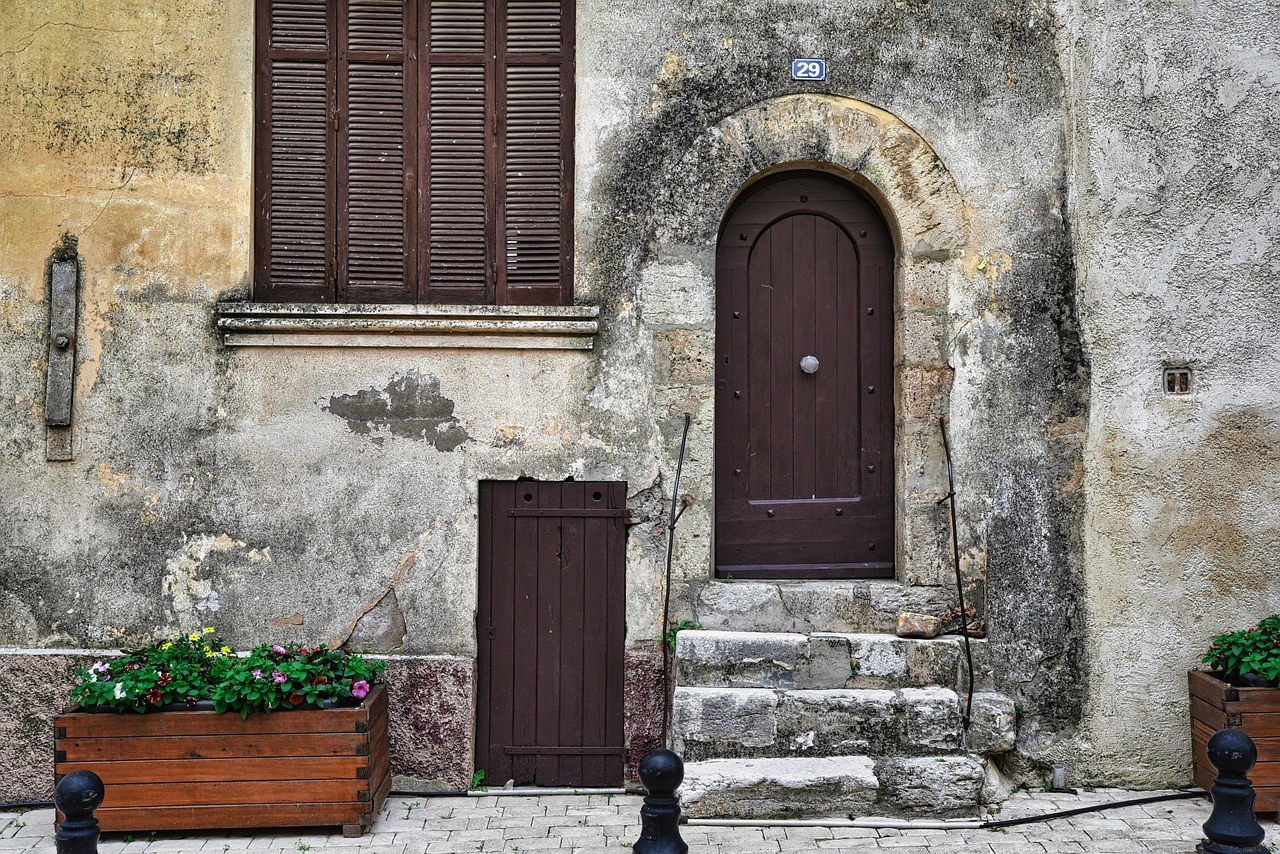
A window is always shaped by the material around it. Rough plaster makes a clean white casement appear especially crisp, while a deep stone recess gives tall church glass weight and distance. On weathered façades, stains, chips and repairs record uneven exposure to rain and sun. Brickwork produces another rhythm, repeating arches and decorative bands around openings of different scales. These surrounding surfaces also guide illumination. A projecting ledge casts a narrow shadow; an angled wall blocks part of the sky; a curved arch gathers darkness along its inner edge. Looking at windows therefore means looking at walls as well. The opening admits light, but the masonry determines how that light is framed, reflected and absorbed.
Continue through the collection